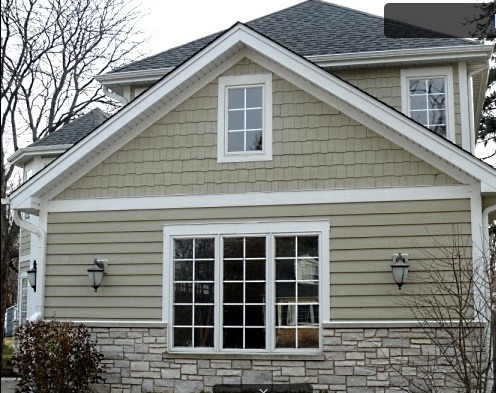
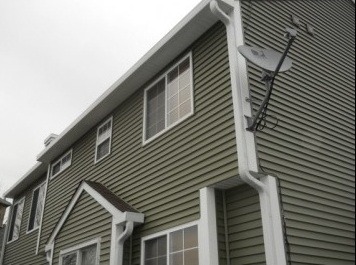
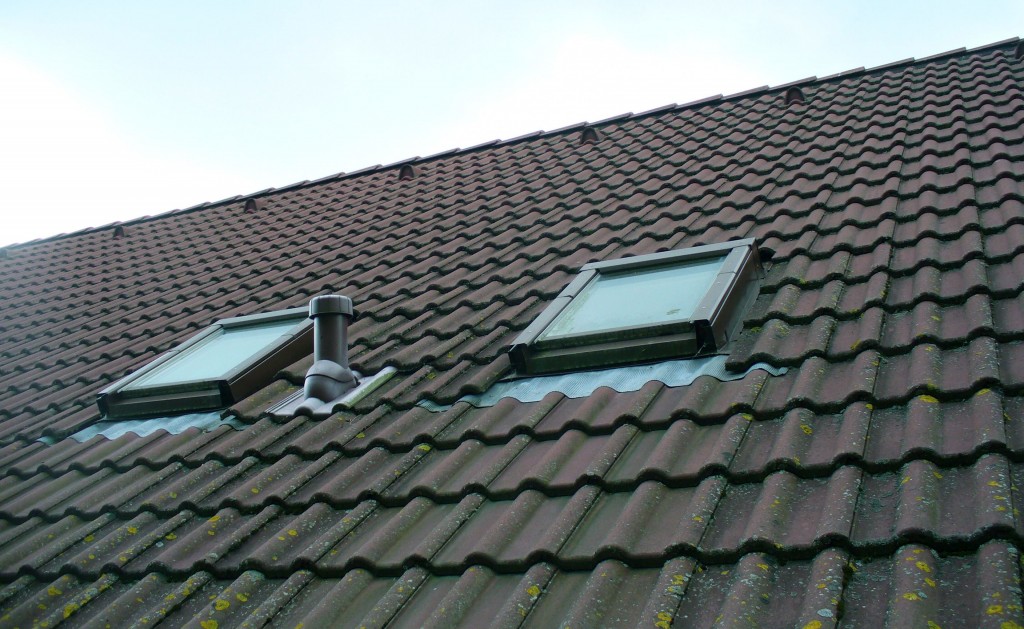
Even if you are hiring a contractor to do your
fiber cement siding installation, it pays to be familiar with the
process. Fiber cement siding has some unique aspects to its
installation. While it may appear installation is out of order, fiber
cement siding is installed differently from shingles and wood siding -
in some aspects they are the same. If you are doing your own
installation, this is a good overview of the process you need to learn. Why fiber cement?
Fiber
cement siding has been around for a while, but only in the past decade
has there been significant innovations in its production that make it
appropriate for any home. The new fiber cement siding options are just
as attractive as wood siding, and cared for more easily. Best of all,
fiber cement siding installation is one of the least expensive materials
to work with. The majority of the cost will come in labor. This can
make it a definite choice over vinyl or aluminum siding.
Prepping the side
The
first task is to prep the side. It should have the correct sheathing
for an exterior wall in your area. If you are unsure of what that
sheathing should be, ask your local home improvement store. Once the
sheathing is in place, you want to snap level lines across the sheathing
as a guide for even placement. The top of the sheathing should be
marked for beginning edge of the fiber cement siding installation. You
don’t have to measure down and mark for each row, but having guidelines
in place every few feet will help you spot if the siding begins to
slant.
Installing the trim
Next, install
the trim. This is different from many types of siding because the open
edges of the board slide behind the trim and then are lowered into
place. This actually makes it easier to keep your siding pieces level,
and makes the whole job quicker. You can also skip this step and do it
after you place the boards, but be aware you run the risk of not seeing
when a board is cut too short to be covered by the trim. Laying and spacing the board
Now
you are ready to lay and space the board. You can choose to do a blind
nail fiber cement siding installation where the nail heads are covered
by the overlaying board, or a revealed nail installation. Each board
should overlap the one beneath by at least ¾ of an inch. The easiest way
to make sure this happens is to cut a jig that you can use to get the
spacing right.
The finish
The last part of the fiber cement siding installation
is the painting and sealing of the siding. Just like with a wood
siding board, paint is applied after to create the finish. This is
another reason many people choose fiber cement over nylon as it is also
easier and cheaper to upgrade a house with paint than a new color
siding.
There are a lot of benefits as well as drawbacks to living in Chicago. One of which is that if you need to have your roof done there are many Chicago roofing companies to choose from. While there isn’t any magical method to picking which one is the best, there is a practical method to narrowing down your list of Chicago roofing companies so you can find the best one for your job. Here is a brief overview of how to go about the process.
Location matters Where you need the roofing work done is going to be one of the first things that will help you narrow down the list of Chicago roofing companies to choose from. There are several companies that do serve Chicago and the surrounding areas, but more companies that have service boundaries. It won’t affect the price much, but it can affect the ability of the roofing company to get your work done on time. If you live in the Lake District and call in a company from the surrounding suburbs you just increased your chance of delays due to traffic and other common city interruptions which could cost you more money. Pick a company that serves your area first, and even one that is located within the boundary of your community. Don’t rule out Chicago roofing companies with area wide service; just make sure that service means more than just a willingness to take any job. Companies with a wide service area should have more than one crew.
What type of roof do you need? While everyone knows there is a difference between commercial and residential roofing, there are also a lot of differences within the available types of roofing for each of these. If you want a metal roof for a residential home that incorporates solar units then you may want a commercial metal roofer, not necessarily a residential roofer who has only worked with asphalt shingles. If you have an older home pay attention to the experience of the company you are choosing. The pitch of many of the turn of the century roofs may require a different type of safety and material handling equipment than the common Chicago roofing companies will carry. If you aren’t sure of the roof you need - such as when replacing a roof - talk to the roofing companies and get their
opinion on what would serve your needs best.
Obeying the rules of the seasons This is another sure-fire way to narrow down your list of Chicago roofing company. Roofing has a season, no matter what type of roofing it is. The earlier part of the season is reserved for more major jobs. Repairs and replacement roofs that aren’t as labor intensive can be reserved for later in the season - unless they involve a roof that exposes a home to weather damage. Roofing companies have to juggle their schedules to make sure that all the work for the season gets started at the right time to make sure it is done by season’s end. Be very wary of a company that is willing to start your work within a few weeks of winter’s beginning. Better to go with a roofer that will tell you the job can be done - but you have to wait until spring, because that shows a greater care for the quality of the finished product. Take the time to find some reviews from previous customers When it comes to narrowing down your list of Chicago roofing companies one of the best ways is a gift of the digital age. It is easier than ever to find out what the opinion of former customers are of their work, to check complaints with the state, and to verify insurance. One word of caution, when reading consumer reviews remember that you are more likely to see a negative review online than a positive one. That doesn’t always mean that the contractor is bad, it is just human nature that if you have a complaint you are more apt to make time to talk about it than if the experience is good. In general, most Chicago roofing companies that have been in business for longer than 8 years have managed to stay in business because they are good to their customers and deliver quality work.
There are a lot of reasons to choose vinyl siding installation over other types of siding. While the initial outlay may be more expensive, this material will last longer and look better for longer than any other. Maintenance is comprised of power washing and the occasional anti-fungal treatment. It can be a perfect way to reduce the amount of effort and stress taking care of your house can cause. It can also be the perfect choice if you are doing upgrades to improve the resale value of your home. This is an overview of the actual stages of vinyl siding installation so that you can be more of an informed consumer when interacting with your contractor.
The plan and the choice Planning and choosing a vinyl siding installation would seem simple, but you must pay careful attention. Talk to your contractor about the options and styles available to you. There are more siding options available beside a horizontal plank design. Make sure you look at all of the styles and options before you contract for the installation. The contractor may surprise you by recommending a mix of materials. It is growing more common to see vinyl siding installed to showcase custom masonry work; this lets you get the best of both worlds, especially when it comes to the resale value.
The surface prep Surface prep is next, which involves more than just having a wallboard to nail the vinyl siding on. Vinyl siding installation is done by attaching tracks or using pre-attached tracks to put sections of siding into place. The siding has to cover an exterior wall which may require a vapor barrier or thermal wrap by code. Your contractor can evaluate the surface and see if there is anything else needed. At a minimum, a moisture barrier is a must.
Trim The end and opening trim pieces can be installed before or after the vinyl siding installation. Many companies prefer to put it on first-as it lets them see immediately if a vinyl piece is too short to be covered. For doors and window openings, an entire day may be spent cutting and fitting the trim around them. Corner trim is usually installed on the same day the wall is covered. Don't assume that the trim has to be the same color as the vinyl siding, you can play with accent colors to really give your home a new look.
Finish The finish process for a vinyl siding installation is easier than any other type of siding installation. It mostly consists of a clean-up of waste and sometimes the contractor will precut waste pieces to leave behind as repair material in case you need it. One thing you should always do is keep a small piece of the siding. This can then be used as a color match piece when adding to the exterior decorations and landscaping of your home.